Wordle: The NYT Phenomenon

Quote from Viet Cho on 07/07/2026, 3:16 am
Wordle, acquired by The New York Times in 2022, is a deceptively simple daily word puzzle that captured global attention. Players have six attempts to guess a five-letter target word; after each guess, tiles turn green (correct letter, correct place), yellow (correct letter, wrong place), or gray (letter absent). Its constraints—one puzzle per day, a fixed word length, and universal rules—produce a compact, repeatable experience that balances challenge and accessibility.
Why it resonated
- Accessibility: No sign-in, no ads initially, and a straightforward interface made Wordle Nyt approachable for casual and committed players alike.
- Social sharing: The emoji-grid share feature let users post results without spoilers, turning individual play into a viral social ritual and fostering friendly competition.
- Ritual and scarcity: The daily one-puzzle cadence created anticipation and communal moments—everyone solving the same puzzle fosters conversation and collective problem-solving.
- Cognitive appeal: Wordle engages pattern recognition, vocabulary, and deductive reasoning—cognitive rewards that drive repeated play.
Gameplay strategies
- Starting words: Some prefer vowel-rich starters (e.g., “AUDIO”) to uncover vowels early; others favor consonant-diverse words (e.g., “CRANE”) to maximize information.
- Positional testing: After identifying letters, targeted guesses help confirm positions—using known letters in new permutations narrows options efficiently.
- Word lists and entropy: Advanced players use knowledge of letter frequency and word lists to minimize entropy (uncertainty) per guess, akin to information-theory approaches.
- Psychological pacing: Avoid premature guessing of plausible but untested words; conserve attempts by prioritizing information gain over immediate solutions.
Cultural impact and spillovers
Wordle spawned countless variants (Quordle, Dordle, Absurdle), adaptations (crossword-style NYT offerings), and linguistic experiments (Wordle in other languages). It prompted conversations about language, education, and daily digital rituals. Educators used it to engage students in vocabulary and logic; families incorporated it into routines.
Critiques and counterpoints
Accessibility and equity: While broadly accessible, Wordle assumes familiarity with standard vocabulary and can marginalize non-native speakers or those with limited lexicons. The NYT’s curated word list may include obscure words privileging certain educational backgrounds.
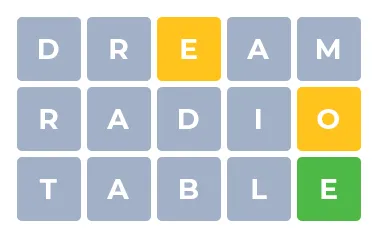
Wordle, acquired by The New York Times in 2022, is a deceptively simple daily word puzzle that captured global attention. Players have six attempts to guess a five-letter target word; after each guess, tiles turn green (correct letter, correct place), yellow (correct letter, wrong place), or gray (letter absent). Its constraints—one puzzle per day, a fixed word length, and universal rules—produce a compact, repeatable experience that balances challenge and accessibility.
Why it resonated
- Accessibility: No sign-in, no ads initially, and a straightforward interface made Wordle Nyt approachable for casual and committed players alike.
- Social sharing: The emoji-grid share feature let users post results without spoilers, turning individual play into a viral social ritual and fostering friendly competition.
- Ritual and scarcity: The daily one-puzzle cadence created anticipation and communal moments—everyone solving the same puzzle fosters conversation and collective problem-solving.
- Cognitive appeal: Wordle engages pattern recognition, vocabulary, and deductive reasoning—cognitive rewards that drive repeated play.
Gameplay strategies
- Starting words: Some prefer vowel-rich starters (e.g., “AUDIO”) to uncover vowels early; others favor consonant-diverse words (e.g., “CRANE”) to maximize information.
- Positional testing: After identifying letters, targeted guesses help confirm positions—using known letters in new permutations narrows options efficiently.
- Word lists and entropy: Advanced players use knowledge of letter frequency and word lists to minimize entropy (uncertainty) per guess, akin to information-theory approaches.
- Psychological pacing: Avoid premature guessing of plausible but untested words; conserve attempts by prioritizing information gain over immediate solutions.
Cultural impact and spillovers
Wordle spawned countless variants (Quordle, Dordle, Absurdle), adaptations (crossword-style NYT offerings), and linguistic experiments (Wordle in other languages). It prompted conversations about language, education, and daily digital rituals. Educators used it to engage students in vocabulary and logic; families incorporated it into routines.
Critiques and counterpoints
Accessibility and equity: While broadly accessible, Wordle assumes familiarity with standard vocabulary and can marginalize non-native speakers or those with limited lexicons. The NYT’s curated word list may include obscure words privileging certain educational backgrounds.